
Self-awareness to help improve this new era and make it golden
The first step in preparing yourself for a new season of well being is understanding your past. First find your triggers for stress, you can predict setbacks and change how you react to them.
Then celebrate your victories, however small, because acknowledging your achievements can give you confidence and strength.
A positive outlook is essential to progress, and 90 percent of happiness relates to your mindset rather than your circumstances.
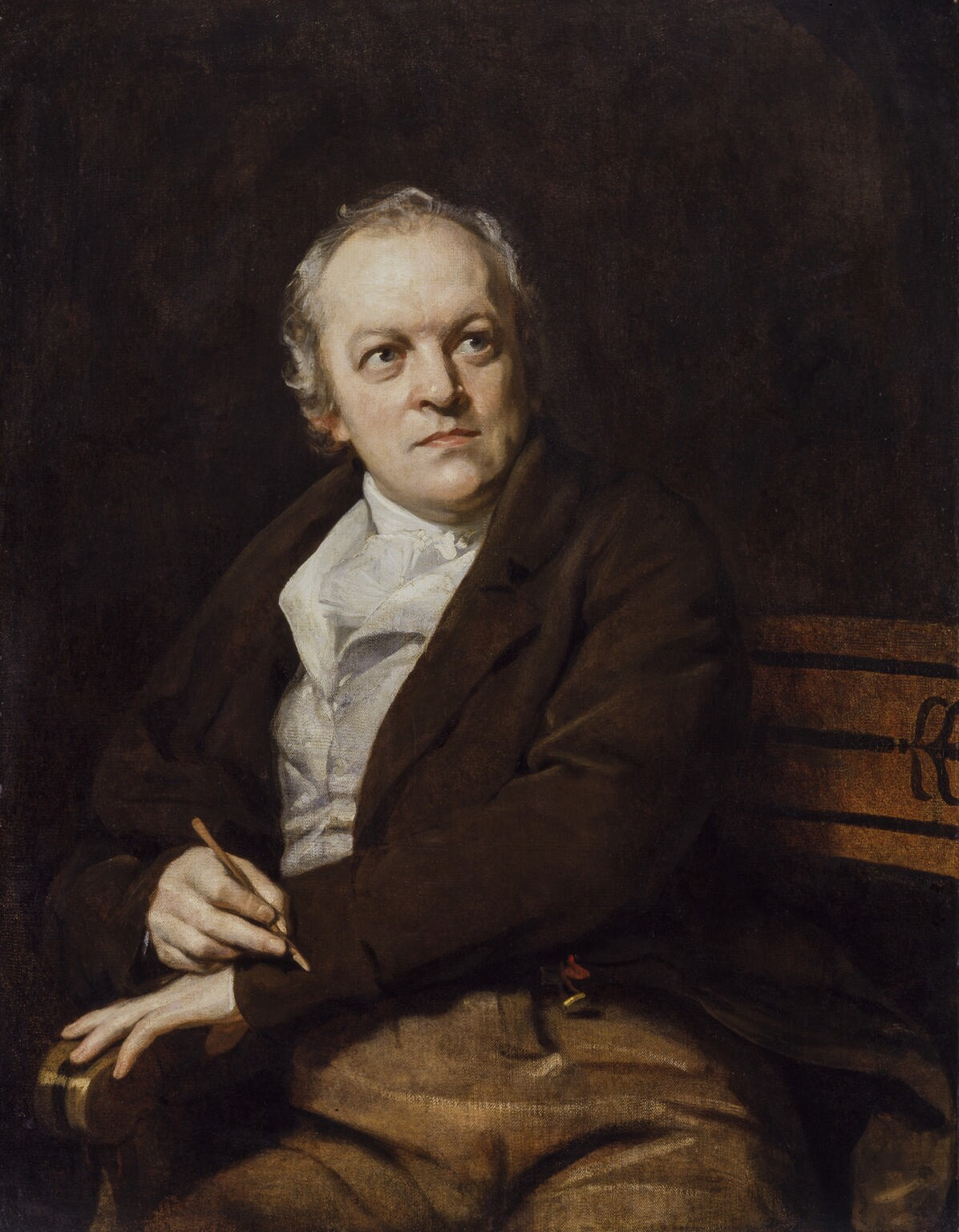
Taking a leaf from the conversations of William Blake, John Twisleton looks at how self-awareness is a clue to making the most of your new year.

It will be the first year of the rest of my life. As 2021 beckons I am more than ready to leap forward into its possibilities given the COVID darkness of 2020. Whatever the new year offers, what I make of it will link to my makeup though, and there lies the rub. To move forward, I need to counter what holds me back and especially those invisible chains of regret and anxiety.
The poet, painter and prophet William Blake was described by 19th-century scholar William Rossetti as ‘a glorious luminary… a man not forestalled by predecessors, nor classed with contemporaries, nor replaced by known or readily surmisable successors’. Blake was the moral visionary the 21st century lacks. Like all prophets he is an ambiguous figure because of his speaking truth to power and to a creativity that dazzles and disturbs to this day as the recent exhibition of his paintings at Tate Britain proved.
“Without contraries is no progression. Attraction and repulsion, reason and energy, love and hate, are necessary to human existence.” William Blake

‘Tyger Tyger, burning bright, in the forests of the night; what immortal hand, or eye, could frame thy fearful symmetry?... What the hammer? What the chain, in what furnace was thy brain? What the anvil? What dread grasp, dare its deadly terrors clasp!’ In those words Blake ponders the ambiguity of the tiger even God has to ‘dare’ create with its beauty and terror. The pub sign from East Dean in Blake’s beloved Sussex, where he wrote his other famous poem ‘Jerusalem’, captures the tiger’s beauty and dynamic.
Extract from Elizabeth Whitney: William Blake expressed his belief in the importance of the imagination by attacking what he called the "mind-forg'd manacles." Unimaginative thought imposes shackles on the human spirit. Blake believed that the outside, sensory world has no inherent meaning, but becomes meaningful through the contributions of the human imagination, thus his stance that reality is a construction of the human mind. Humans bring meaning to nature in the form of imaginative thought. However, Blake recognized the limitations that humans often place on themselves , limitations that are inflicted by the human mind. Self-imposed social and intellectual restrictions deprive humans of experiencing nature and the true human spirit. The "mind-forg'd manacles" represent Blake's perception of self-limitation and the denigration of the human imagination.
Blake explores this idea of self-limitation in his poems entitled Songs of Innocence and Songs of Experience. Blake first creates a world of innocence where the inhabitants are child-like and are completely accepting of knowledge without any concern for truth or meaning. He then progresses to the world of experience where nature has been abandoned and evil prevails as a result.
In Songs of Innocence, the dominant symbol is the child. The poems are narrated from the point of view of a child and represent the youth of the human imagination. At this point in its life, the imagination is not fully formed and does not yet contain its own distinctive character. The child is dependent on the information he receives from adults and does not question their faulty reasoning. This relationship is intended as a commentary on the Christian belief of dependence on God as akin to the child's dependence on its father. The innocent believes that the world is inherently good and that individuality is not important. The innocent's world view is one of "Mercy, Pity, Peace, and Love" where God the creator bestows meaning upon nature. However, Blake does not believe that an external source can endow nature with meaning. Blake believes that divinity resides within the human breast and so it is the human imagination that gives meaning to the world. He does not believe that the innocent can be truly happy because the innocent does not know the wonders of the human imagination, and so does not truly know nature, not does the innocent have any sense of individuality. The innocent is unknowingly limiting himself because his version of the world is based upon what he has been taught and not a creation of his own imagination.

Like Blake’s tiger leaping forth, I want to make the most of 2021. Within me though is so much of 2020 that the change of year is unlikely to bring forth more fruitful resolutions than past New Year without decisive action. The tiger within is forever getting chained up by regrets and anxieties.
“Enlightenment means taking full responsibility for your life.”
William Blake
‘Think of yourself in a concert hall listening to the strains of the sweetest music when you suddenly remember that you forgot to lock your car. You are anxious about the car, you cannot walk out of the hall and you cannot enjoy the music. There you have a perfect image of life as it is lived by most human beings’. So writes Indian author Anthony De Mello (1931-1987). His own recipe for happiness is a welcome distillation of Buddhism and Christianity, recognising that breaking attachment to unfounded regrets and anxieties is the clue to one happy new year after another.
“These things will destroy the human race: politics without principle, progress without compassion, wealth without work, learning without silence, religion without fearlessness, and worship without awareness.” Anthony De Mello
As we leap into 2021, letting go of past failures and the regretful pride going with that loosens one chain hampering forward movement. The other chain to loosen is anxiety, the dark side of our creative capacity to imagine the future. Imagining with Blake and De Mello, a love and realm immensely beyond my drawing me forward, I take heart at the invitation of the anonymous 14th century spiritual writer: ‘look now forward - and let the backwards be’ (The Cloud of Unknowing).
The book counsels the young student to seek God, not through knowledge and intellection (faculty of the human mind), but through intense contemplation, motivated by love, and stripped of all thought.
"For the first time you lift your heart to God with stirrings of love], you will find only a darkness, and as it were a cloud of unknowing Whatever you do, this darkness and the cloud are between you and your God, and hold you back from seeing him clearly by the light of understanding in your reason and from experiencing him in the sweetness of love in your feelings. And so prepare to remain in this darkness as long as you can, always begging for him you love; for if you are ever to feel or see him...it must always be in this cloud and this darkness." Translated by A. C. Spearing.'Hold infinity in the palm of your hands'- make 2021 Golden
Welcome to the New Year's writer John Twisleton.

An ideas and people person, author and broadcaster. A Yorkshire Dalesman he has worked his way down England to become a Sussex Downsman living between London and Brighton in Haywards Heath. His doctorate in polymer science. was awarded by Oxford University where he switched careers to train as an Anglican priest serving in Doncaster, Guyana, Coventry, London and Sussex in parishes and as a diocesan adviser and college principal. John is married to Anne with three children and two grandchildren. His middle name Fiennes is a reminder of his connection with the famed Twisleton-Wykeham-Fiennes family. His passion is helping people find peace in turbulent times and get humanity better minded to serve the common good.
--------------------------------------------------------------

The New Chinese year is the year of the GOLDEN OX.
Golden only happens every 60 years - so out of the ashes of 2020 comes something GREAT
Let's come together and make 2021 a SUCCESS.
About the Chinese Golden year
Miku Chan New York
The 60 year cycle first: Imagine you have two systems to count years in, one based in 10 and one based in 12. Where does the 12 come from? Wikipedia says from the observation of the position of Jupiter in the night sky - actually, not a bad choice if you are looking for a cosmic clock. And the cycle of 10 is kind of obvious, after all the Chinese number system is decimal.
 In any case, if you let the two systems run in parallel (1A, 2B, 3C, …), the combinations repeat after 60 years - the set of 10 has repeated 6 times and the set of 12 ran through 5 times and you are back to 1A, so to speak. That’s the so-called sexagenary cycle. Instead of numbers and letters, the Chinese 10-year system uses the so-called heavenly stems (甲乙丙丁戊己庚辛壬癸) and the 12-year system are the so-called earthly branches (子丑寅卯辰巳午未申酉戌亥), but apart from that it’s just like I described it: you start at 甲子 for year one, continue with 乙丑 for year two and so forth until it rolls over after 60 years. So far, so good. But no gold yet, right?
Chinese tradition believes in 5 elements, and the duality of yin and yang. If you take those two together 5 x 2 = 10, so you can marry them all up nicely like this:
As a physicist, that reminds of unitary groups in quantum field theory / symmetry in particle physics, but I digress :-D. Back to our sexagenary cycle - if each of the years has one of the 10 stems and each of those stems is assigned an element, you can see how we are cycling through two wood years followed by two fire years then two earth years and so forth. Finally, I forgot to mention that the 12 earthly branches are mapped 1:1 onto the 12 animals of the zodiac as follows:
See it yet? Let’s do a worked example:
- At the time of writing (March 2019) we are in year 36 of the cycle (己亥)
- From the first chart you can see that this is an earth year
- From the second chart you will find that 亥 is the year of the pig
- Ergo, most of 2019 (after Chinese new year) is an earth pig year
Count up the heavenly stems (庚) and count up the earthly branches (子) - so it’s metal (= gold) and a year of the rat, so “a golden rat”. This will be followed by a metal (or golden) ox. Now, the character used for metal (金) also means “gold”, hence the confusion between gold / metal.
This might be a long description, but if you have a cycle of 2 x 5 mapped onto 10 stems running in parallel to a cycle of 12 branches mapped onto 12 animals and as long as you know the order of these 10 & 12 by heart (or have a handy table) you can determine exactly which type of year it is. In recent years, however, marketing in China seems to have decided that every year is a golden year, at least to judge from statements I have seen thrown around on posters in numerous locations that claimed that 2013 was a golden snake (actually water) etc.
Are you in need of a weekly fiction fix
Subscribe and get it sent straight into your in box
* indicates required
Email Format
No comments:
Post a Comment