
"Hope means Optimism, that leads to achievement".
John Twisleton looks at how mindfulness helps our capacity to look for a brighter future during adversity

What is Hope?
“Hope” is commonly used to mean a wish : its strength is the strength of the person's desire. But in the Bible hope is the confident expectation of what God has promised and its strength is in His faithfulness."

Hope links to our intellect, love of fellows and the gift of faith. Each aspect has been fuelled partly by figures from the past who have come alive to me. I think back to reading about three unconnected inspirational figures from science, global exploration and faith respectively who were by chance contemporaries: Marie Curie, Ernest Shackleton and Charles De Foucauld. Each of them were determined and in keeping hope for the future achieved outcomes significant to this day.It is part of our makeup as human beings to hope against the odds; which poet Alexander Pope in his Essay on Man (1732) wrote;
‘Hope springs eternal in the human breast’.
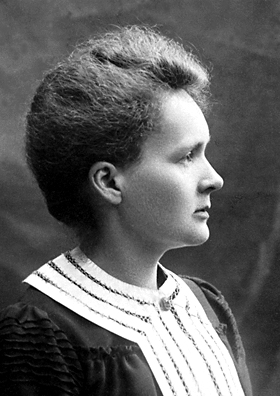
As research scientists become priests my understanding of hope links to our intellect, love of fellows and the gift of faith. Each aspect has been fuelled partly by figures from the past who have come alive to me as heroes, especially the near contemporaries Marie Curie (1867-1934), Ernest Shackleton (1874-1922) and Charles De Foucauld (1858-1916).
In my youth I became fascinated by Chemistry doing experiments in the garage to the dismay of my parents. I read widely and came to recognise the significance of Marie Curie through her daughter Eve’s biography of her mother.
_and_Marie_Sklodowska_Curie_(1867-1934)%2C_c._1903_(4405627519).jpg)
In late 1891, Marie Curie left Poland for France and began a scientific career in Paris, investigating magnetic properties of various steels. In her studies Curie hypothesized that radiation was not the outcome of an interaction of molecules but must come from the atom itself.
“The radiation of thorium has an intensity of the same order as that of uranium, and is, as in the case of uranium, an atomic property of the element.
It was necessary at this point to find a new term to define this new property of matter manifested by the elements of uranium and thorium. “
That same year Pierre Curie entered her life; it was their mutual interest in natural sciences that drew them together.

Marie Curie was exiled from Poland to France after losing her husband, fellow academic Pierre Curie, killed in a road accident and bearing prejudice as a woman scientist made for a hard life. All of this failed to arrest her hopeful intellectual pursuit which, through noting the electrical conductivity around certain compounds, led her to discover and name ‘radioactivity’. Marie Curie became an inspiration for my studies in chemistry on account of her hopeful sense that there is always more to be discovered and our intellect is a major tool for that. Curie’s discovery and naming of the radioactive element Polonium links to the love she retained for her native land.
Her body lies alongside Pierre in the Pantheon, Paris, the first women to be entombed there, though in a lead case as she became unknowingly a pioneer martyr of the radioactivity she discovered with her husband. Whilst Curie was pursuing her research the adventurer Shackleton was pursuing exploration of the Antarctic, less an intellectual and more a practical uncovering of the unknown.

Saints, Martyrs Visionaries and Adventurers - do they all have Hope to succeed?
Exploration of the Antarctic,
Ernest Shackleton’s overland crossing of Antarctica was famously chronicled through the then novelty of photography. In 1915 his ship, hopefully named ‘Endurance’, got trapped and then crushed in ice over a thousand miles from land. It sank so that Shackleton travelled with his men almost that distance in an open boat across the world’s stormiest seas.
They camped on a remote lump of rock and shingle called Elephant Island whilst Shackleton travelled with two men to South Georgia only to land on the uninhabited side of that island. The three struggled over uncharted mountains to the whaling station of Stromness. From there they were assisted in rescuing their fellows on Elephant Island.
Not a man was lost. Shackleton’s failure in logistics was compensated by the capacity to build hope he possessed as a leader communicated in the evident love he had for his fellows.
‘We had suffered, starved and triumphed, grovelled down yet grasped at glory, grown bigger in the bigness of the whole’ he wrote. Shackleton’s statue in its striking open faced balaclava is on a wall across the road from London’s Albert Memorial.

Charles De Foucauld
Foucauld became an increasingly serious student of the geography and culture of Algeria and Morocco. In 1885 the Societe de Geographie de Paris awarded him its gold medal in recognition of his exploration and research.
living in hope was less intellectual or humanitarian than a venture of faith. Brother Charles, inspiration for the contemplative order of Little Brothers and Sisters of Jesus who live in the poorest parts of the world, caught my attention. He drew me to visit the indigenous people he became associated with in Morocco and southern Algeria, where he moved in order to live as a hermit in the Algerian Sahara. Unfortunately due to his radical beliefs in New religious congregations, spiritual families, and a renewal of eremitic life he was assassinated in 1916. He was quickly considered to be a martyr .

In May 2020 Brother Charles
Pope Francis gave permission for Brother Charles to be advanced towards being declared a saint. A French aristocrat, he joined the military. Having lost his faith he lived a life of indulgence. After military experience he set off aged 23 to explore Morocco where contact with strong Muslim believers challenged him to repeat to himself, ‘My God, if you exist, let me come to know you’. This prayer was answered by a call to imitate Christ in the poverty of Nazareth living as a hermit among ‘the furthest removed, the most abandoned’ people of the Sahara.
To his simple desert hut he welcomed anyone who passed by, whether Christian, Muslim, Jewish, or pagan saying he wanted to “shout the Gospel with his life” and so conduct his life that people would ask, ‘if such is the servant, what must the Master be like?’
His assassination in the colonial war was paradoxical because of his deep friendship with and esteem among the native Tuaregs. Though his mission as a hermit seemed a failure, growth of contemplative communities under his patronage evidenced ‘hope springing eternal’ alongside the growth in dialogue between Christians and Muslims which offsets their conflict that is more frequently in the news. I found De Foucauld’s capacity to build hope from engaging with his fellows of whatever creed a mighty inspiration. Is it possible for human beings to live well without hope? Loss of hope surely contributes towards widespread deterioration in mental health following the extraordinary event of COVID-19. Recovering hope in the wake of the pandemic is an uphill struggle and it links to how we think, how we love and how we believe. I go back to my three heroes to be touched by the imprint they made on me in these three realms of my life. Marie Curie is a reminder to keep intellectual focus so that the best future opens up for me, not just through the ideas I imbibe but through taking some of those ideas seriously and applying them to building a better future. Ernest Shackleton reminds me how building relationships is a clue to hope so that, as in his famous journey, you need at times to go slower together rather than faster alone. Charles De Foucauld is a hopeful reminder not to measure success in life - he died unknown among relative strangers - on this side of eternity save through its fruits such as those Little Brothers and Sisters of Jesus that continue to contemplate in difficult places.
‘Hope springs eternal in the human breast’ from within, from around and from above.
Meet this week's writer John Twisleton.

An ideas and people person, author and broadcaster. A Yorkshire Dalesman he has worked his way down England to become a Sussex Downsman living between London and Brighton in Haywards Heath. His doctorate in polymer science. was awarded by Oxford University where he switched careers to train as an Anglican priest serving in Doncaster, Guyana, Coventry, London and Sussex in parishes and as a diocesan adviser and college principal. John is married to Anne with three children and two grandchildren. His middle name Fiennes is a reminder of his connection with the famed Twisleton-Wykeham-Fiennes family. His passion is helping people find peace in turbulent times and get humanity better minded to serve the common good.

Are you in need of a weekly fiction fix
Subscribe and get it sent straight into your in box
* indicates required
Email Format
No comments:
Post a Comment