
Jekyll and Hyde
or A Discovery of Witches?
by Sarah Davies
This is the second in a series of blog posts where I look at one of the seminal works of 19th century gothic fiction and pair it with a book from the 20th or 21st century. Today the pair are both about perception of self (our own perception and that of those around us), and how this can change the whole story of our lives…

The Strange Case of Dr Jekyll and Mr Hyde

This 1886 novella by Robert Louis Stevenson was written in a few days, Stevenson maintained he was bedridden due to ill health, but a number of his biographers have claimed that he was high on cocaine or ergot. Whatever the reason, Stevenson wrote the story after a nightmare in which some of the principle scenes came to him.
In a nutshell

Utterson then reads a letter from Hyde that tells how this well-built, handsome doctor of 50 wanted to explore his baser instincts and so created a potion that freed the smaller, younger, less strong, Edward Hyde. As the story progresses and Edward becomes stronger, he no longer needs the potion to enable the transformation, and Jekyll needs an ever-greater dose to regain control. Eventually, Jekyll runs out of one of the ingredients of the potion and is unable to source any more. He decides that after writing the full confession in the letter, he will ensure that Hyde kills himself to evade capture for his crimes.
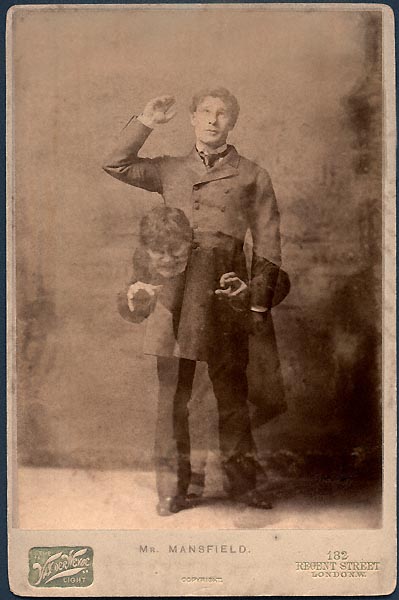
Jekyll wishes to explore the duality of the human personality and develops his potion to split the largely good (Jekyll), from the purely evil (Hyde). Jekyll himself admits that he realises that the more he exercises his evil nature, the stronger Hyde becomes, until he is almost strong enough to be the dominant character. Jekyll further realises that to be truly human, we need both sides of our natures, but he has no way of recombining his duality and his only way out is death.
The novella was originally published as a Penny Dreadful (otherwise known as a Shilling Shocker), and was hugely successful. It is a horrifying tale in that the reader must recognise that we all have the capacity to have a Hyde within us, but thankfully most of us choose not to let it have the upper hand in our lives.
A Discovery of Witches
I wanted to have at least some poetry feature in this collection of gothic horror works and Blake Morrison’s 2012 collection ‘A Discovery Of Witches’, seemed a perfect fit as it was made to ‘celebrate’ the 400th anniversary of the 1612 Pendle Witch Trials. I lived in Lancaster for almost 10 years and it is an event that is still memorialised today, not just in Pendle and in Lancaster Castle, but in the whole area.

In a Nutshell
A collection of poems based around the Pendle Witch trials, Morrison uses quotes from contemporary sources, nursery rhymes and more in the title poem. The poems also draw on the landscape of the Lancashire/Yorkshire border.
PENDLE HILL.
—♦—
| Great Pendle Hill and Penyghent, And lofty Ingleborough, Ye will not find three grander hills And trace old England thorough. OLD RHYME. |

Some of the poems, written in the Lancashire dialect, make for tricky reading, but they slow you down and make you think about the horrific story that they’re re-telling.
Yes! reader, let us leave off moralizing,
And with the rod of Reason crack the crown
Of Visions, on the wings of fancy rising—
Those Pictures of the Past that grimly frown
Athwart the Stream of Ages, which would drown
Our modest mirth, and dull our golden glee:—
Now, on the vale of Ribblesdale look down,
Where, grove and and mansion you may see,
With lordly Mytton, bounded by her rivers three.
Notes: The Discoverie of Witchcraft is a partially sceptical book published by the English gentleman Reginald Scot in 1584, intended as an exposé of early Modern witchcraft. It contains a small section intended to show how the public was fooled by charlatans, which is considered the first published material on illusionary or stage magic.
Scot believed that the prosecution of those accused of witchcraft was irrational and un-Christian, and he held the Roman Church responsible. Popular belief held that all obtainable copies were burned on the accession of James I in 1603.
Why pair these books?
I paired these two books because they both draw on the perception of ourselves and how that makes us behave, for Jekyll he wants to explore his baser instincts; for the Pendle men and women, they believed they were witches, they believed that what they did and said made a difference to the world and the people around them. Also, Jekyll and the witches, used their knowledge of science, herbs and nature to effect change (for good or evil), and the perceptions of others perpetuated the stories surrounding them.
Both books explore duality and how that is dealt with both by individuals and society at large. In the end, in both these stories, death is the only conclusion felt acceptable by the societies in which the protagonists find themselves, but whilst for the fictional Jekyll/Hyde death probably was the only escape, for the Pendle Witches, there was little evidence that what they did was truly harmful, they merely did what they could, using the knowledge they had to try and help their community, the fact that one man happened to suffer a stroke just after one of the women had cursed him was unfortunate and probably gave disgruntled locals an opportunity to strike back at those who were different (for a novel account of the Pendle Witches try ‘The Familiars’ by Stacey Halls (2019)), another excellent read).
Meet Sarah Davies this week fascinating writer

I’m a writer, storyteller, poet and performer. If I’m really honest, my ideal reader/audience is me, I write what I want to read, and am just really grateful when other people enjoy it too.
I’m a reader as well, I make time every day to read something and often have three or four books on the go at a time.
When I’m not doing word-related things, I spend time in my garden, poking around at the crops I hope will grow, or I’m out running (very slowly), around my neighbourhood.
I was thrilled to be able to re-read and then write about gothic fiction, because it really is one of my favourite genres.
What is Dr. Jekyll and Mr. Hyde about?
In basic terms, the core of the story concerns a medical scientist who has a fascination with dividing a man's soul by separating good from evil and vice versa. Dr. Jekyll - the scientist in question - achieves his ambition via some wild, fanciful experiments upon himself. The results see Jekyll becoming an evil version of himself, someone who caters to no one's laws or whims except his own. Hence the character of Mr. Hyde is born. The setting is London, sometime during the Victorian era.
Despite every movie adaptation placing emphasis squarely upon the Jekyll/Hyde characters, the novel pushes them into the background. The main character is a lawyer by the name of Mr. Utterson, whose christian name eludes me. He becomes something of an amateur detective as he investigates the recent behaviour of his friend, Jekyll.
It makes for gripping reading from beginning to end and has rightly earned its place as a classic of the genre.
Fear of the unknown was a major factor contributing to the monstrous acts committed against the accused. Very few of the accused ever practiced anything at all, and usually the ones who did were doing so trying to protect themselves, and their families. Also, very few of the accused ever did anything “evil” and mostly attempted different methods of healing, herbal remedies, and protection. You should study up on “the history of witchcraft.” I think you will be horrified but impressed at the information you find.
No comments:
Post a Comment