
Elizabeth Gaskell verses J.K. Rowling
Quests for moral justice – Could J.K. Rowling be the Elizabeth Gaskell of our day?
By Anna Price


Elizabeth Gaskell and J.K. Rowling are two highly acclaimed names in the world of literature. While one lived and published over one hundred years ago, the other is one of the best-selling authors of the twentieth and twenty-first century. Their works are set in different time periods and written in different genres, but there are, in fact, parallels between the two authors that prove they are more akin than at first perceived.

Despite the difference in time period, both Gaskell and Rowling’s texts have the capability to withstand the test of time. Gaskell is a well-loved 19thC novelist, her novels were popular with her contemporaries but many of her texts (such as Cranford, North and South and Wives and Daughters) are not only still being read today, but also studied extensively at University level. She is a household Victorian name, she operated in the same circles as Charles Dickens and Charlotte Brontë, and she had an equally big impact on her readership at the time.
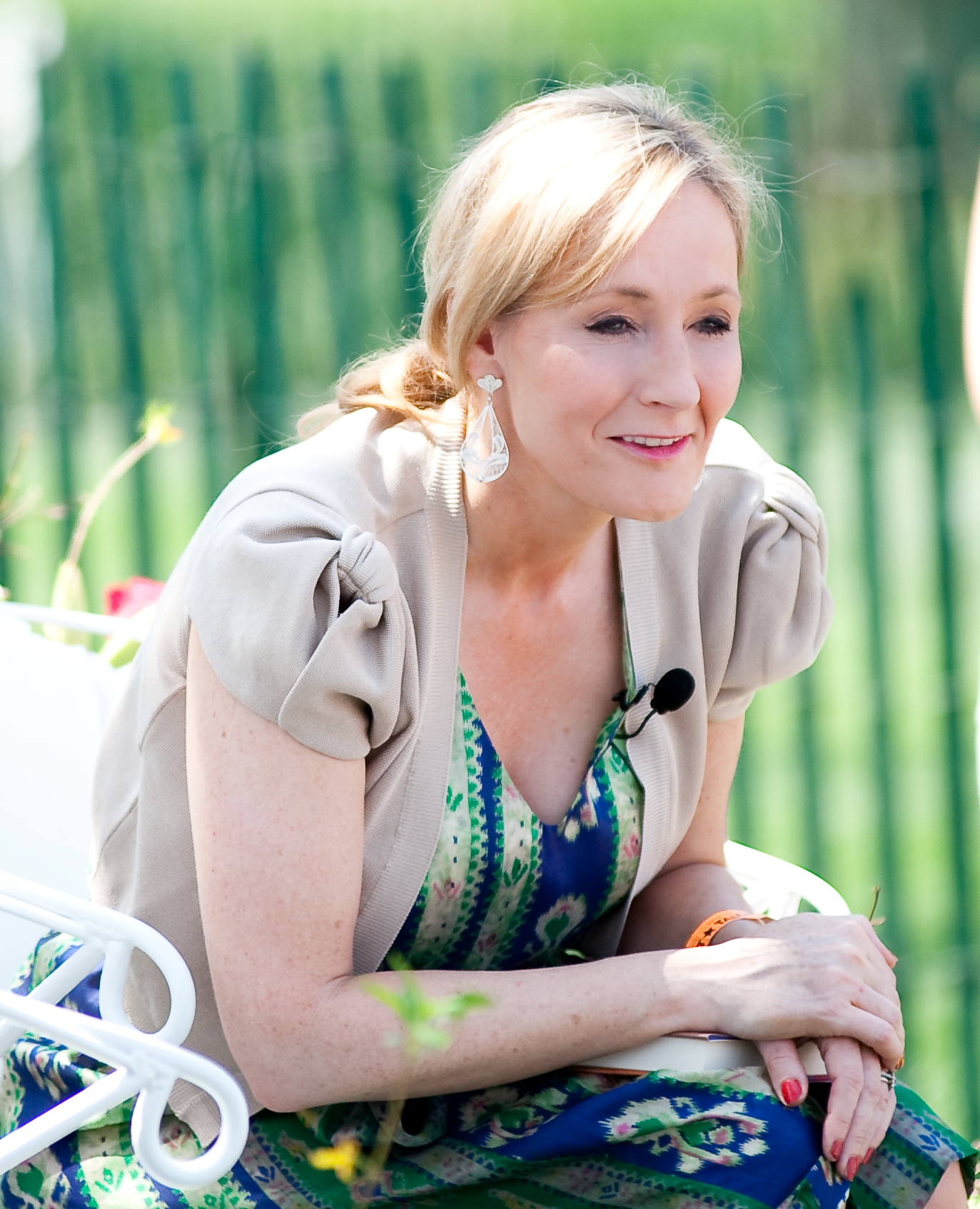
In the same vein, Rowling’s magic-based, Harry Potter, series may be classed as children’s literature, and her original audience has grown up, but they have not outgrown the franchise. Instead, Rowling has created a generation of readers that will continue to pass on their love for her stories. Considering multiple UK academic institutions are now offering courses on Harry Potter and fantasy literature in general, it is not hard to foresee that one hundred years down the line, Rowling’s novels will also continue to be read, studied and analysed.
Both authors will be absorbed for years to come, but more interestingly, both, in their individual ways, epitomise the society in which they were published. Elizabeth Gaskell set out with the purpose of revealing the inherent, and very real, injustices in Victorian society. Similarly, behind J.K. Rowling’s fabricated, magical world are considerations and criticisms on the shortcomings of our modern society.
Gaskell is renowned for her truthful depictions of the multiple layers of Victorian society. From the southern sophisticated upper classes, to the destitute factory workers in the north, Gaskell lays bare and critiques the discordant social classes and the inherent injustice. Her first novel, Mary Barton, was published anonymously in 1848 and is set against the backdrop of 19thC Manchester.

At this point in history, Manchester was at the centre of England’s booming cotton industry and Gaskell strives to reveal the dire situation of the factory workers at the hands of the industrial revolution. Gaskell’s description of Carson’s Mill illustrates the bleakness of Manchester at this time, as she writes:
“the east end of the factory, fronted into a very narrow back street, not twenty feet wide, and miserably lighted and paved. Right against this end of the factory were the gable ends of the last house in the principal street – a house which from its size, its handsome stone facings, and the attempt at ornament in the front, had probably been once a gentleman’s house; but now […] it was a gin palace.”
The words ‘miserably lighted and paved’ along with ‘right against’ and ‘very narrow’ indicate not only the density of the buildings, but also the unkept nature of the streets. The proximity of buildings to one another, the poorly lit streets and the badly paved roads suggest the opportunity for increased crime and the propagation of disease. The specific use of the adverb ‘miserably’ connotes destitution and gloom, and pairing this with a lack of lighting suggests the unknown dangers lurking in the dark.
It is these unknown dangers that were notoriously associated with the lower classes, feeding the social fear of the aristocrats and wealthier members of society. This fear is epitomized in the corruption of the gentleman’s house with its ‘handsome stone facings’ and ‘ornament in the front’ evolving into a gin palace: a place of supposed sin and crime. Gaskell plays on her reader’s fears and insecurities as she shines a light on the horrors of inner-city Victorian life.
Through her characters and plot, however, Gaskell indicates how the poorest of society did not bring this situation upon themselves, and instead reveals how it is as a result of the continued injustice and ignorance of the ruling classes. Gaskell’s plot is successfully sensationalist, meaning it is written in a way to provoke public interest, and the juxtaposition of this hyperbolic storyline and the spotlight on the plight of the Mancunian poor captured the nation’s conscience. Furthermore, while enlightening the Victorian public on the injustices experienced by the underclasses was not unheard of, featuring Manchester as the cityscape was quite original.

Similarly, originality is certainly a key element of Rowling’s texts. Although parts are based on myths and legends, the wizarding world of Harry Potter is authentic and fresh. But beyond the spells, magical creatures and moving staircases, Rowling does incorporate and shed light on modern societal issues. It is no secret that the Weasleys are not a wealthy family, and their monetary concerns are often an uncomfortable parallel to many people’s real lives, especially as the reader knows that Harry is quite literally sitting on a pot of gold.
Another societal issue often read in Rowling’s text is the concept of ‘Pure-Blood’, ‘Half-Blood’ and ‘Mudblood’ pertaining to issues of race. This notion of a person’s blood being pure, and the desire to weed out those whose blood has been watered down, or infiltrated, is distinctly reminiscent of the Nazi party’s desire for a wholly Aryan race. While Rowling’s wizarding societal construct is fabricated, it is based on real social issues that have happened in our modern history, or that continue to occur today.
It is also important to note that the notion of pure-blood superiority is heavily criticised in the texts, and it is one of the driving factors in the ultimate good vs. evil plot composition. Harry’s rebuttal of Malfoy’s offer of friendship at the beginning of the series is as a result of the fact that Malfoy does not think ‘they should let the other sort in’ to Hogwarts, further explaining his belief that ‘they should keep it in the old wizarding families’.
In turning down Malfoy’s friendship, Harry also rejects the concept that only pure bloods are worthy wizards, a point further proven by his becoming friends with Hermione, a very bright and talented muggle-born witch. This occurs in the first chapters of the series indicates, revealing an importance placed on breaking these heritage and blood-based judgements. Despite the fantasy and the magic, Rowling manages to highlight deeper issues of our modern society, demonstrating how the Harry Potter series does serve a moral and social purpose.
Both Gaskell and Rowling weave moral injustices and societal issues as underlying themes within their texts. While with Gaskell it is at the forefront in purpose, plot and setting, Rowling is more subtle and layers it beneath intricate plot lines and character relations. Even though themes of society, justice and morality are incorporated differently within their texts, I believe that they were successful in influencing their respective audiences. As Gaskell draws attention to the debilitating Victorian class divide, Rowling highlights issues of wealth disparity and racism apparent within our time period. These two authors may differ in time period, genre and language, but they are united by their timeless popularity and their exploration of moral and social issues within their works.

ANNA PRICE:
Hello! I’m Anna: English Lit graduate, Victorianist, part-time PhD-er and full-time bibliophile. I am also an Editorial Assistant at a national magazine, a music teacher and a coffee, museum, music and art lover. I can be found in my soft-office or on twitter at: @annaroseprice.
Thank you Anna for a stimulating read
Join our community
& Instagram @happylondonpress
.....
No comments:
Post a Comment