
Murder most foul...
or ladies who like to kill
by Cavan Woods

Detective fiction has often been criticised that it is strong on plot and weak on characterisation. Edmund Wilson wrote a despairing article in the 1940s “Why do people read detective fiction?” suggesting that he had outgrown it by the age of 12! George Orwell in an essay called “The Detective story” saw the genre in decline as a literary form by 1940 and argued that there were no great talents among its writers. Orwell and Wilson had fallen into the trap of suggesting that popular fiction could not be literary. The works of Dorothy L Sayers, P.D. James and Val McDermid (and many others too!) prove that to be wrong.
Detective fiction has more flexibility than often thought. It does have certain rules or conventions. It might need a community – a country house, a village, a part of a city but you could equally set one on Mars: the claustrophobia of the setting is important to build the tension. There must be red herrings – clues that send the reader or the detective in the wrong direction. It should contain a reconstruction of the criminal event and a great reveal, often with all the principal characters gathered together to hear who committed the criminal act from the investigator- be that a professional police officer or a gifted amateur. The best of the genre has plausibility and refrains from unlikely coincidence.
The successful writer can use the conventions or play with them to create original and literary fiction. It isn’t these that limit the author. but the imagination of the creator of the tale. Great talents will always produce classic literature, whatever the rules of a genre might be. Many of the best detective fiction writers have been women. Let us examine three of them:

1. Dorothy L Sayers
Dorothy L Sayers was an interesting, complex person who helped to create the modern detective novel. She had begun her working life in advertising but was to join the literary world, being one of the few women to be an honourable member of the Inklings, the Tolkien/C.S.Lewis literary group based in an Oxford pub. Her Christian faith often informed the stories, helping her to examine the motivations of the evil that lead to crime.
Sayers started her career in crime fiction with “Whose body?” the first of a series of twelve of Lord Peter Wimsey novels. Orwell in his essay on detective fiction suggested that people were only interested in him as he was the son of a duke. For him, the writing and reading of detective fiction was an act of class snobbery.
Wimsey is a much more complex character than might be expected. He has a first from Oxford and has post traumatic stress disorder as a result of his distinguished service in the First World War. The upper class playboy who seems a fool who drops his "g"s is a bit of an act, as he has a sharp brain. Sayers acknowledged there were elements of PG. Wodehouse’s Wooster and Jeeves in the relationship between Lord Peter and his "man" Bunter.

There is at the heart of “Whose body?” a great premise. What if a body nobody can identify is found in a bath at the same time that a financier goes missing who you think has been murdered? The twists and turns of the plot are very rewarding. There is a criminal who reaches a Hannibal Lecter level of evil, whom Wimsey helps reveal.
The novel is perhaps marred by the anti-Semitic speech of Peter's mother - or is that designed to highlight that evil in society? The modern reader feels great unease about this as it does go on a long time and it does not seem to be totally rejected. The lack in this story is a strong woman figure that could have an effect on the action. Sayers would put that right in subsequent books by the development of the character of Harriet Vane who would become over the series, Lord Peter's girlfriend, assistant investigator and eventually his wife.
Sayers, like Agatha Christie, was to help develop the detective novel in a way that made it popular and had insight into the motivations of her characters.
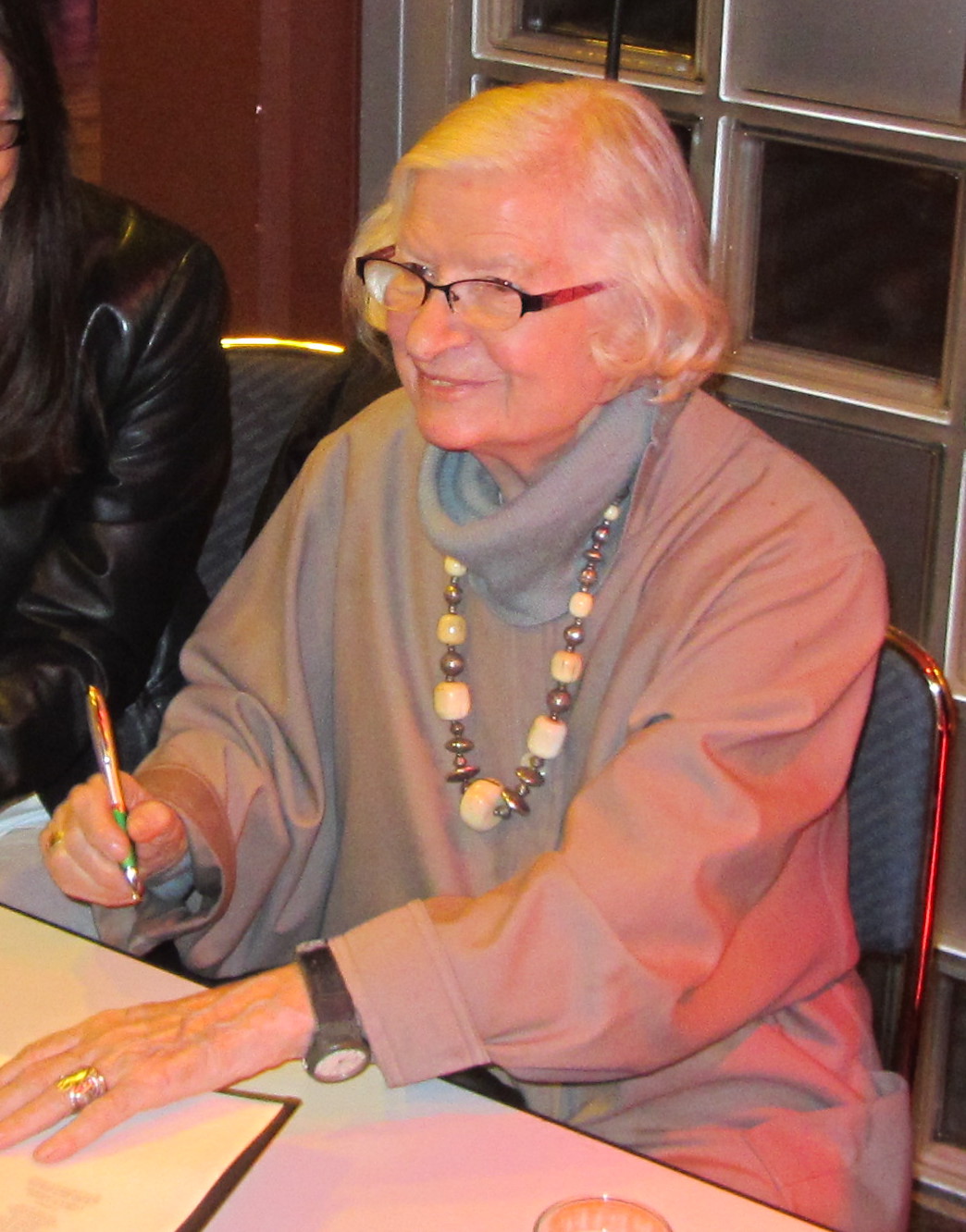
2. P.D. James
PD. James said that her job as a detective story writer was “bringing order out of disorder." In many of her novels she wrote, the detective was Inspector Adam Dagliesh. Like most crime stories, he would often be put into a world that he might not be familiar – the theological college in “Death in Holy orders” or that of a small publishing house in “Original sin.” James was able to create these small worlds very recognisable, as she would be meticulous in her research. This enabled her to develop realistic characters in the difficult situations of dealing with murder or other crimes.
Let us look at one of these novels. “Original sin” has one character who is a failed female crime novelist who has become a little too keen to borrow from Agatha Christie. Was James in part having a joke against herself and the odd choice to be a detective fiction writer? As well as great humour, there is warmth for the many complex and vulnerable people in the story. The power struggles and deceits in the publishing house are explored by characters that reflect the different roles and jobs that they have, with many faults and skeletons in their cupboards.
P.D. James could satirise her craft and be playful with its conventions, as only truly gifted experts can do. She was able to extend the genre, taking it into new or unexplored areas or styles. One of the best examples of this was where she took the world of “Pride and Prejudice”, followed Austen’s style, but then transferred it to a sequel to an original tale which is a crime story in the novel, “Death comes to Pemberley.” This is her best and most original book. Being able to retain the texture of the story but then move it onto a different genre which involves detection yet remain consistent with the style of Austen shows her great skill. She develops the initial characters of the first tale and makes them take on new roles such as accused and investigator. (Read the novel to find which two characters take those roles!) This demonstrates that great literature and detective fiction can coincide.
.jpg)
3. Val McDermid
Scottish writer Val McDermid has created several series of detective books, the most numerous of which are the Tony Hill and Carol Jordan novels. The most recent of these is “How the Dead Speak.” In the story, Tony Hills is a criminal profiler, but is in prison as he had to kill to protect himself in the previous novel. Carol Jordan is the police officer who worked with him and whose reckless actions led her to having to leave the service.
The action concerns the discovery of bodies discovered in an abandoned convent’s graveyard. Yet this is just the beginning of a mystery – complicated by the fact that some of the corpses are young girls who did attend a school the nuns ran but others are homeless men who had no connection to it. Despite Hills and Jordan being excluded from the initial investigation, it is their partnership which helps to solve the mystery.
There are a whole variety of characters in this novel – from prisoners to police officers, nuns, priests and lawyers. McDermid draws each of them away from cliché to reality. She creates recognisable characters which transcend stereotypes. One interesting plot device to do this is the use of quotations from the book that Hill is writing in prison about criminal profiling, which gives us information about the process as readers but acts to help move the plot on. It has the secondary function of showing us more his character as much as descriptions of his actions in the story.
She refers to the classic crime writers either in the text or by the dialogue of her characters. This is not because she is being arch or postmodern. McDermid knows there is a tradition and wants to celebrate that. To be a modern detective and not ever make an occasional reference to Agatha Christie or Sherlock Holmes would not be creating a credible reality.

Conclusion
George Orwell was wrong to say that detective fiction was not literary. The skill of the three writers featured shows that crime fiction can be strong on plots and character. It can act as a commentary on society in general. These stories can provide piercing satire on small, claustrophobic worlds like a publishing house or a hospital or a convent. They are able to expose the hypocrisies and evil that can lurk inside the human heart by telling their stories in particular contexts which can in the most skilled hands be made to apply universally.
Detective fiction has given us many different reasons why people may commit crimes but it shows us too that the world of the killer is not as far from us as we might like. You can make a good case for all great crime stories showing us the words of the prophet Jeremiah who once wrote,” The heart is deceitful above all things, and desperately wicked: who can know it?”
The writer of a great detective novel and their readers can often get an insight into the reasons for evil, using the story as the medium to reflect on this great mystery of existence.
Meet our writer Cavan Wood

Cavan is a well sought after writer, teacher and speaker based in Sussex of over thirty years experience. He has written about religious, moral, cultural and political themes , having written or contributed chapters to over twenty books published by Bloomsbury, Oxford University Press , The Bible Reading Fellowship and Hodder amongst others. He is interested in politics, literature, cinema and is a leader in his local church. He is married with a wife, two children and a somewhat surly cat called Chloe.
Are you in need of a weekly fiction fix
Subscribe and get it sent straight into your in box
* indicates required
Email Format
No comments:
Post a Comment