
“Badly done Jane”?
Was Charlotte Bronte right about Jane Austen and her characters?
by Cavan Wood

Writers can often succumb to a feud with a fellow author. There were famous quarrels such as Virginia Woolf and Arnold Bennett, Gore Vidal and Norman Mailer as well as the most recent, Salman Rushdie and John Le Carre. The literary feud is nothing new. One of the most famous involved two Nineteenth century authors, both the daughters of vicarages but startlingly different in their approaches to storytelling.

The Brontes were remarkably critical of the work of Jane Austen. Charlotte Bronte wrote this in a letter to the critic G.L. Lewis:

‘Why do you like Miss Austen so very much? I am puzzled on that point. What induced you to say that you would rather have written ‘Pride & Prejudice’ or ‘Tom Jones’ than any of the Waverley novels. I had not seen ‘Pride & Prejudice’ till I read that sentence of yours, and then I got the book and studied it. And what did I find? An accurate daguerreotyped portrait of a common-place face; a carefully-fenced, highly cultivated garden with neat borders and delicate flowers – but no glance of a bright vivid physiognomy – no open country – no fresh air – no blue hill – no bonny beck. I should hardly like to live with her ladies and gentlemen in their elegant but confined houses.’
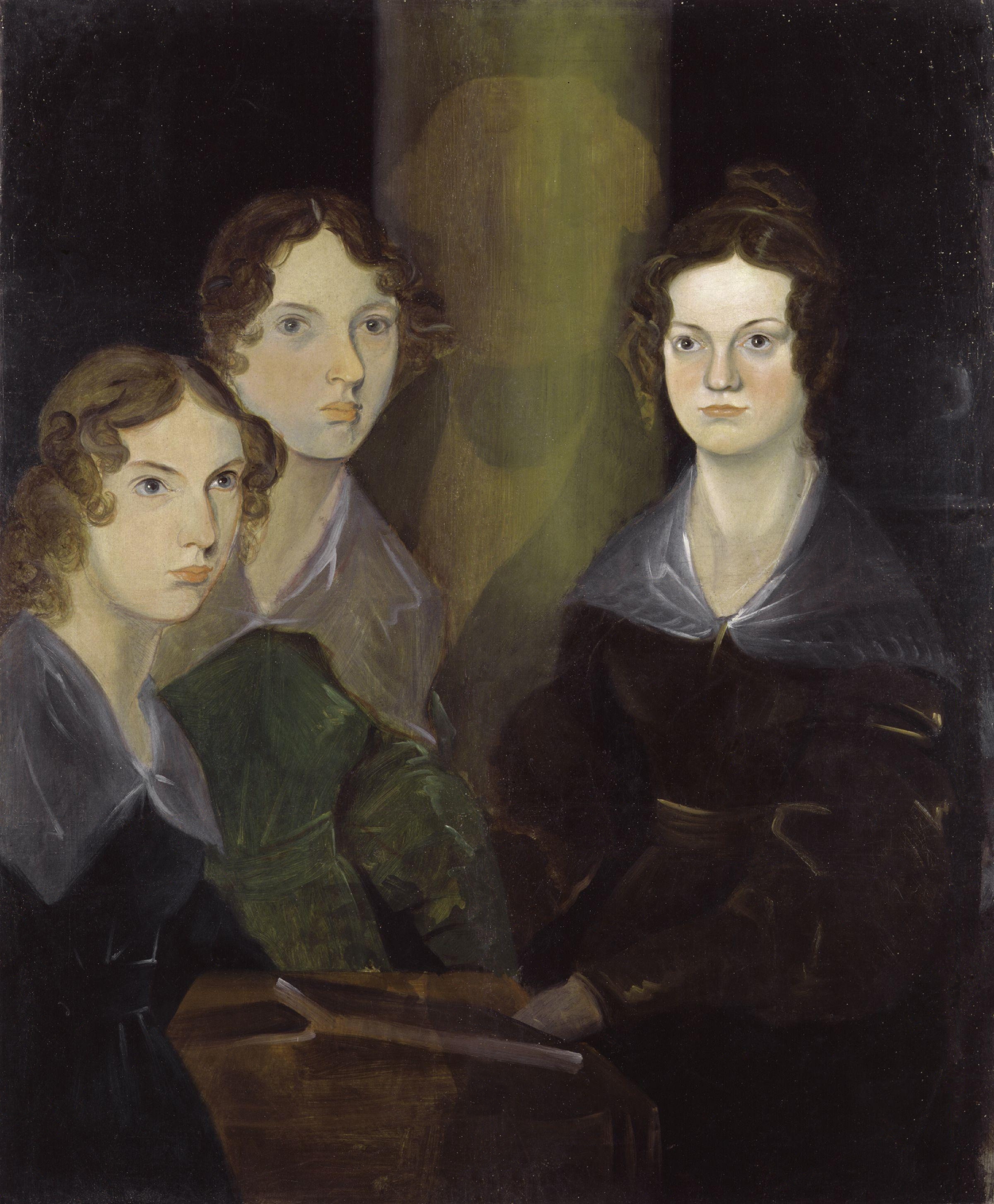
Charlotte would have approved of the remarks of Mark Twain, who once wrote,
"I haven't any right to criticize books, and I don't do it except when I hate them. I often want to criticize Jane Austen, but her books madden me so that I can't conceal my frenzy from the reader; and therefore I have to stop every time I begin. Every time I read 'Pride and Prejudice' I want to dig her up and beat her over the skull with her own shin-bone."
Yet where does this antipathy come from? Both Austen and the Brontes were women brought up in vicarages. Both had begun their writings in almost secrecy from the rest of the world. Yet their lives were different too, with the Brontes having to deal with the alcoholism of their brother Bramwell.
It is the root of these different experiences – Austen in the South and West of the country, The Brontes over thirty years later in the Northern and industrialising region. There were subtle divisions of class and background that colour the negativity of Charlotte to Jane.
Charlotte mistakes the setting for the motivation. Austen’s novels might be about repulse as
“I should hardly like to live with her ladies and gentlemen in their elegant but confined houses.’” Yet the writer of “Emma” and “Pride and Prejudice” may have a limited setting but there is more subversion than it often appears.

If we look at characters in both Austen and in the Brontes, we may find some common as well as some contrasting themes. If we focus especially on the chief male and female protagonists we can see what each of the novelists are creating.

Austen characters
Elizabeth Bennet and Fitzwilliam Darcy in “Pride and Prejudice”
The quick judgement of Elizabeth Bennet in “Pride and Prejudice” is in part something she has learned from watching the way her mother behaves. The diffidence and dislike of the niceties of social etiquette of Mr Darcy does put him at odds with the norms of the village Austen’s novel is largely set in.
Both Elizabeth and Fitzwilliam need to change: one has too much “pride” (Or is Mr Darcy actually shy and awkward, perhaps even on the Asperger’s spectrum, being often able to say the truth with a lack of tact?) and one has too much “prejudice” (Elizabeth.) The novel is about their mutual growth which can eventually enable them to be in love.
It is also in contrast to the activity of Mr Darcy’s friend Mr Wickham, whose move in the direction of the young and clearly inexperienced Lydia Bennett is motivated by lust whilst the younger girl has a crush. It is Mr Darcy whose care and common sense who helps to deal with a difficult situation.
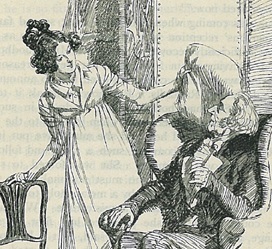
Emma Woodhouse and George Knightly in “Emma”
Jane Austen wrote that only she would like the title character of Emma. The 2020 film makes the protagonist of the tale the most annoying she has ever been seen and is therefore closer to the book.
There is no doubt that Emma is an immature and insensitive person who thinks she is bringing joy to the world when in fact she is showing its opposite. Her way of relating to her friend Harriet Smith shows that she is self-obsessed, wanting Harriet to be a plaything for the romantic and class games she wishes to pursue. The ever wise Mr Knightly can see that Harriet is giving all kinds of false ways of looking at herself and others from Emma and rails against. He is the one who takes Emma to task when she has been unspeakably rude to Miss Bates. “Badly done, Emma” is a rebuke that makes the lead character totally understand her folly and her need for change.
Knightly is the older man who has watched her from afar, perhaps as a surrogate uncle but as she has become a woman, has come to realise that he loves her. He wants to see the best for her and is able to change her. There isn’t a hint that Knightly is flawed: it is Emma who needs change.

The Brontes
Heathcliff and Catherine in “ Wuthering Heights.”
When Emily Bronte died aged 30, she went to her grave thinking that “Wuthering Heights” was a failure. It was left to her sister Charlotte to write – using the pseudonym Currer Bell an introduction that seemed to address the central problems of the novel.
“Whether it is right or advisable to create being like Heathcliff, I do not know: I scarcely think it is.”, she wrote. Is he a villain or a romantic hero? We know that he is the victim of cruelty and neglect by the family that adopts him. He is humiliated but is his reaction equal to what he suffers? He plots revenge and is angry. He becomes the archetype for the bad boy that provokes the sexual interest of the heroine, Catherine. His love for Cathy is returned. However, when he has to leave the area for three years, he returns to find Cathy wed and he himself soon has a bride.
Yet they are married to good people who love them. When Cathy dies, there is a great deal about Heathcliff’s grief, but this becomes more fuel to ruin other people’s lives. The way he is able to wreak revenge on others is the large sum of money he earns while away from the area. The setting of the novel suggests that he must have been involved in the slave trade, though this is never stated.
Cathy has made a marriage to Edgar Linton which does solidify her social position but we have a sense that her husband loves her and wants her best. Yet she is still in love with Heathcliff, a situation that just leads to tragedy. As a portrait of sexual obsession leading to destruction, “ Wuthering Heights” is a powerful novel. Yet is it a realistic one? Charlotte’s preface suggests that her sister was a little over wrought, being “ a nursling of the moors “ and not having much experience of the world.
There is no hint in the lives of Cathy and Heathcliff of some great moment of redemption: it is their children who may bring some hope in their love.
Jane Eyre and Mr Rochester in “Jane Eyre”
Jane Eyre is a heroine much closer to an Austen character, though of a lower class. She is a good soul, whose actions are selfless and who thought the victim of a difficult beginning is not a vengeful victim like Heathcliff. She cannot live on the charity of others, having to become a governess in
If in “Emma”, Mr Knightly helps to redeem Emma, in “Jane Eyre”, it is Jane who redeems Mr Rochester by her love, despite all that has happened. She does struggle with her love – which at one point she is worried that it is a form of idolatry. Her religious faith is tested further when Mr Rochester attempts to marry her before he is really a widow, which causes her to reflect on the psalms of despair. When she leaves Rochester and becomes the attention of a somewhat single minded missionary called St John Rivers who believes that he can talk her into being his wife and giving everything for the cause. Some have suggested that Charlotte has written an anti-Christian book, but Jane remains a person who prays and who sees in her life a destiny.
It isn’t the grand call of the mission field but to care for Mr Rochester. There is a paradox that is at the heart of her love: he has to go blind in order to truly understand who he is and the nature of love, he learns to “see” as Jane sees it.
What can we learn from the examination of the eight protagonists over the four novels?
Looking across the four novels, there are some common strands. Mr Darcy and Mr Rochester are men who change by finding true love. Both Elizabeth Bennett and Jane Eyre do not really understand the men they fall in love with until a dramatic event (the eloping of Wickham and Lydia, the fire which lead to Rochester becoming blind). “Pride and Prejudice”, “Emma” and “Jane Eyre” all have endings that reflect a morality through the book that has taken their characters on a journey that has led them to profound change. All three are moral tales, in which humility, truth and above all selfless love win through.
However, “Wuthering Heights” does not fit this pattern at all. Heathcliff becomes bitter and thinks he is a victim of bullying, his desire to make money in order to gain power to exact a revenge that ultimately his love for Cathy is compromised. The hope at the end of the novel is a next generation – but it does not seem a certain one. Charlotte had commented that her sister’s book reflected that Emily had spent too much time on the moors that this obsession with a wild and desolate place had fed itself into her fiction.
Conclusion Was Charlotte right to criticise Jane Austen?
Charlotte Bronte’s criticism of Jane Austen seems to me to be ill-founded. Although they were both vicars’ daughters, they had very different experiences of class. The Brontes were the children of a self-educated Irish father. The Austen had lived in and around the home counties. Whilst the Brontes were writing novels that drew upon some of the darkness of gothic tales, Austen would mock that in “ Northanger Abbey” and usually used comedy to make her points.
Drama is an important way to tell tales but comedy can have a moral purpose every bit as much. The struggles the Bennett family face over Mr Wickham and his lust for Lydia is not that dissimilar to Jane Eyre’s struggles with Mr Rochester. Charlotte was much closer to the moral purpose of Jane Austen than she realised, but rather like a punk band in the 70s, they could hardly admit to themselves or others that they might have learnt a few things from Prog Rock! Every generation needs to deny, to refute the last in order to make its mark: but it is also more indebted to it than it often recognises, in Charlotte’s case.
It was Emily Bronte who makes the biggest break with Austen, not Charlotte with an antihero who it is difficult to love, a doomed love and a very ambiguous ending. She might have created the bleak novels that have followed it. There is no possibility of redemption in “ Wuthering Heights.” There is no obvious Christian morality that undergirds both “ Jane Eyre” and Austen’s work. For many, they might regard this as truer to the world we live in, yet personally for me, drama or comedy at its best does bring hope and true, radical change to its characters and not leave them in despair and chaos. That might be a dream, but some dreams might be better than “ reality.”
 Cavan is a well sought after writer, teacher and speaker based in Sussex of over thirty years experience. He has written about religious, moral, cultural and political themes , having written or contributed chapters to over twenty books published by Bloomsbury, Oxford University Press , The Bible Reading Fellowship and Hodder amongst others. He is interested in politics, literature, cinema and is a leader in his local church. He is married with a wife, two children and a somewhat surly cat called Chloe.
No comments:
Post a Comment